
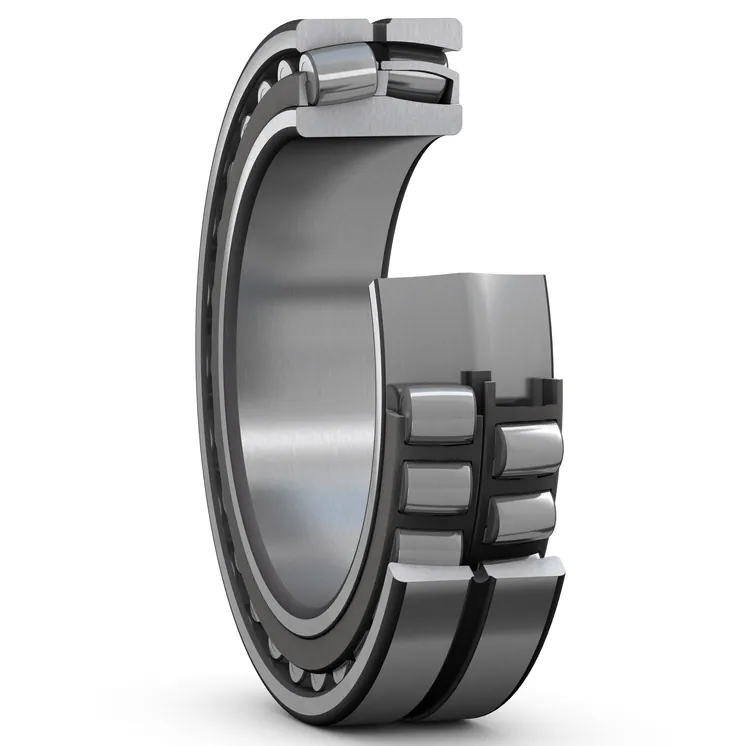
Angular contact ball bearings can withstand both radial and axial loads simultaneously. Capable of operating at higher speeds. The larger the contact angle, the higher the axial bearing capacity. The contact angle is the angle between the line connecting the contact point of the ball and raceway in the radial plane and the vertical line of the bearing axis. High precision and high-speed bearings typically have a contact angle of 15 degrees. Under the action of axial force, the contact angle will increase. There are raceways on both the inner and outer rings of angular contact ball bearings, and the inner and outer rings can move relative to each other along the axial direction of the bearing. This type of bearing is particularly suitable for bearing composite loads, i.e. loads acting both radially and axially. The axial load bearing capacity of angular contact ball bearings varies with the contact angle α Increase with the increase of. The contact angle is the angle between the line connecting the contact point of the ball and raceway in the radial plane and the vertical line of the bearing axis.
The installation quality of angular contact ball bearings will affect the accuracy, service life, and performance of the bearings. Therefore, please thoroughly study the installation of bearings, that is, please follow the operating standards including the following items for bearing installation.